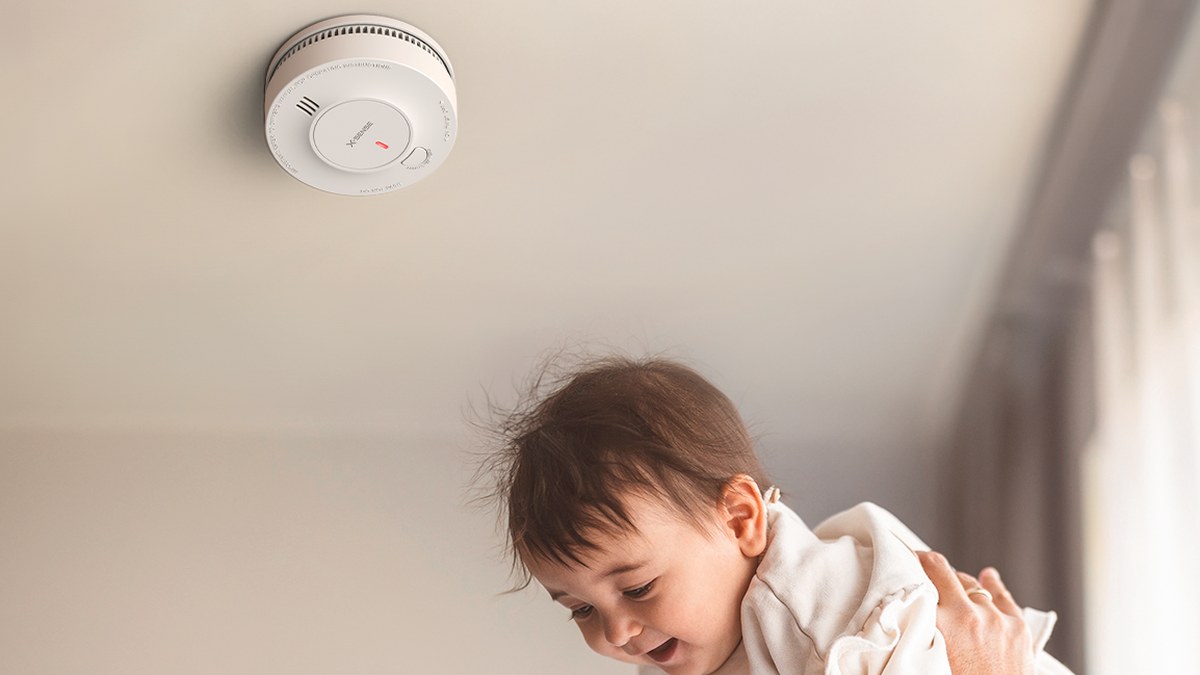
X-Sense has become one of the most popular smoke and carbon monoxide alarm brands online, and its lineup is big enough to be confusing: standalone combos, wireless interconnected kits, app-connected systems, plug-in CO alarms, and heat alarms, often with model numbers one letter apart. This guide sorts the best X-Sense smoke and carbon monoxide detectors by the room and the job, so you can buy the right model (and the right number of them) the first time.
To be upfront: we have not tested these alarms hands-on. Our picks are based on X-Sense’s published specs, independent reviews from outlets that did test them, sales rankings, and owner reviews. Where a claim is X-Sense’s own, we say so. This post contains affiliate links; if you buy through them we may earn a commission at no extra cost to you. As an Amazon Associate I earn from qualifying purchases.
Get our best DIY tips, free
Practical home and yard projects, tool picks, and money-saving fixes in your inbox. No spam, unsubscribe anytime.
Quick answer: For most homes, the X-Sense SC07 is the X-Sense alarm to start with: one unit detects smoke and carbon monoxide, has a 10-year sealed battery, and X-Sense lists it to UL 217 and UL 2034. If you want every alarm to sound when one goes off, choose the SC07-W, the wireless interconnected version. Add SD2J0AX smoke alarms in bedrooms if you need more units on a budget, an XC01-R for extra CO coverage near a furnace or attached garage, and consider an XH02-M heat alarm for a kitchen or garage where smoke alarms false-alarm.
Our X-Sense picks at a glance
| Use case | Model | What it covers |
|---|---|---|
| Best overall | SC07 | Smoke + CO; 10-year sealed battery; standalone |
| Best interconnected | SC07-W | Smoke + CO; 10-year sealed battery; wireless interconnect, no hub |
| Best budget multi-pack | SD2J0AX | Smoke only; 10-year sealed battery; standalone |
| Best standalone CO | XC01-R | CO only; replaceable CR123A battery |
| Best for kitchens and garages | XH02-M | Heat only; sealed battery (7 to 10 years); wireless or base station |
The best X-Sense smoke and carbon monoxide detectors

Best overall
X-Sense SC07 Smoke and Carbon Monoxide Alarm
The SC07 is the simplest way to cover both hazards with one device. It pairs a photoelectric smoke sensor with an electrochemical CO sensor, runs on a sealed lithium battery rated for its full 10-year life, and shows the CO level (30 to 999 ppm) on an LCD that lights only during an alarm or test, so it won’t glow in a bedroom at night. X-Sense lists it as meeting UL 217 and UL 2034. It’s also the most proven X-Sense model on our list: it ranked No. 1 on Amazon’s smoke and CO alarm best-seller list with roughly 4,500 ratings averaging 4.5 stars when we checked, and Bob Vila’s testers named it their best overall smoke detector after it alarmed within about 10 seconds of their smoke test. They also cautioned that the twist-on activation switch can be fragile, so turn it gently. It’s sold in single units and multi-packs; check current price.
- Smoke and CO in one budget-friendly unit; 85 dB alarm
- 10-year sealed battery: no battery swaps or low-battery chirps for years
- CO readout in ppm; X-Sense lists it to UL 217 and UL 2034
- Standalone: units don’t talk to each other (see the SC07-W if you want that)
Affiliate links: I may earn a commission at no extra cost to you. As an Amazon Associate I earn from qualifying purchases.

Best interconnected system
X-Sense SC07-W Wireless Interconnected Smoke and CO Alarm
The SC07-W is the SC07 with a radio built in. When one alarm detects smoke or CO, every linked alarm sounds, and the one that triggered flashes red so you can find the source. That matters: the NFPA points to CPSC research showing interconnected alarms were more likely to sound and wake people during home fires. There’s no Wi-Fi, no hub, and no subscription; the alarms pair directly with each other, and X-Sense rates the link at over 820 feet in open air. X-Sense lists it to UL 217 and UL 2034, and it’s on X-Sense’s own best-seller list. SafeWise picked it as its best smoke detector overall. The tradeoff is no phone alerts. Packs run from 1 to 12 alarms; check current price.
- Whole-home interconnect with no wiring, no hub, and no app required
- Smoke and CO in every unit, with the same 10-year sealed battery and ppm display as the SC07
- Triggered alarm flashes red so you can find the problem fast
- X-Sense caps how many SC07-W units can join one system; check its compatibility list for big homes
Affiliate links: I may earn a commission at no extra cost to you. As an Amazon Associate I earn from qualifying purchases.

Best budget multi-pack (smoke only)
X-Sense SD2J0AX 10-Year Standalone Smoke Alarm
Code-minded placement takes more alarms than most people expect, since the NFPA calls for one inside every bedroom plus outside each sleeping area and on every level. The SD2J0AX is X-Sense’s budget way to fill those bedroom ceilings. It’s a photoelectric smoke-only alarm with a sealed 10-year battery and a self-test, and X-Sense lists it to UL 217 (10th edition). It’s one of X-Sense’s best sellers, and it’s sold in packs of up to 15, which usually brings the per-alarm cost down; check current price. Because it doesn’t detect CO, pair it with combo alarms in hallways outside bedrooms. If you want bedroom alarms that sound together, X-Sense’s SD19-W (also on Amazon) is the interconnected smoke-only version.
- Big multi-packs for covering every bedroom
- 10-year sealed battery; X-Sense lists UL 217 (10th edition)
- Photoelectric sensor, which is generally quicker on smoldering fires
- Smoke only: no CO detection
Affiliate links: I may earn a commission at no extra cost to you. As an Amazon Associate I earn from qualifying purchases.

Best standalone CO alarm
X-Sense XC01-R Carbon Monoxide Alarm
If your smoke alarms are already in good shape and you just need CO coverage, the XC01-R is X-Sense’s simple battery CO alarm. It uses a Figaro electrochemical sensor, shows real-time CO in ppm, and can mount on a wall or sit on a shelf, which also makes it easy to pack for a cabin or hotel stay. It runs on a replaceable CR123A battery and has a 10-year product life. One honest caveat: in Consumer Reports’ standalone CO ratings, the related XC01 scored below the Kidde and First Alert models it was rated against. No X-Sense CO-only alarm made the top 30 of Amazon’s CO detector best sellers when we checked. For most rooms, we’d rather put an SC07 combo on the ceiling and use the XC01-R as an extra CO alarm near a furnace room or the door to an attached garage.
- Real-time CO reading in ppm on an LCD
- Wall-mount or tabletop; easy to travel with
- Replaceable battery and 10-year product life
- CO only: pair it with smoke alarms
Affiliate link: I may earn a commission at no extra cost to you.

Best for kitchens and garages
X-Sense XH02-M Interconnected Heat Alarm
Kitchens, attached garages, and laundry rooms are where smoke alarms false-alarm from cooking smoke, steam, dust, or exhaust, and where frustrated people pull them off the ceiling. A heat alarm ignores all of that and goes off only when the temperature climbs past its threshold (129 to 149°F, per X-Sense). The XH02-M uses a sealed battery that X-Sense rates for 10 years on its own (about 7 years when connected to the SBS50 base station), and it can link with X-Sense’s Link+ wireless alarms or connect to that base station for phone alerts. It’s on X-Sense’s best-seller list. Know its limits: a heat alarm does not detect smoke or CO and doesn’t replace the smoke alarms your home needs. Check current price.
- Won’t trip from toast, steam, or garage exhaust
- Sealed battery, rated 7 to 10 years depending on setup
- Links with X-Sense Link+ wireless alarms, or with the base station for app alerts
- Heat only: supplements, never replaces, your smoke and CO alarms
Affiliate link: I may earn a commission at no extra cost to you.
What about X-Sense smart (app-connected) alarms?
X-Sense also sells app-connected models: the SC07-MR and XP0A-MR (which link through the SBS50 base station), the Wi-Fi SC07-WX, and the voice-alert XP0A-iR. They add phone notifications, remote silencing, and family sharing. This guide focuses on alarms that work without an app or hub, because they’re simpler to set up and keep working if your Wi-Fi goes down. If phone alerts matter most to you, compare those models on X-Sense’s site; otherwise an SC07-W system gives you the most important feature, every alarm sounding together, with no app required.
Hardwired homes: replace like with like
If your house has hardwired alarms (they’re on a 120-volt circuit with a backup battery), replace them with hardwired units rather than swapping to battery models, because local code and the interconnect wire in your walls usually expect it. X-Sense’s option is the XP0J-SA hardwired smoke and CO alarm, which adds voice alerts, a CR123A backup battery, and wired interconnect for up to 18 units, per X-Sense. Turn off the breaker before you swap anything, and call an electrician if the wiring doesn’t match the new plug.
Where to put smoke and CO alarms, room by room
Placement matters as much as the model. These rules come from the NFPA for smoke alarms and the CPSC for CO alarms; always follow the manual that comes with your alarm, too.
- Bedrooms: a smoke alarm inside every bedroom. A smoke-only SD2J0AX works here if there’s a combo alarm in the hallway.
- Hallways outside sleeping areas: a smoke alarm and a CO alarm. An SC07 or SC07-W covers both in one spot.
- Every level, including the basement: at least one smoke alarm and one CO alarm per floor. In the basement, put the smoke alarm on the ceiling at the bottom of the stairs.
- Living areas on levels without bedrooms: in the living room or near the stairs to the next level.
- Kitchen: keep smoke alarms at least 10 feet from the stove to cut nuisance alarms. A heat alarm like the XH02-M can cover the kitchen itself.
- Attached garage and furnace room: a CO alarm in the living space next to the garage door or near fuel-burning appliances, plus a heat alarm in the garage if you want fire coverage there.
- Mounting height: smoke alarms on the ceiling or high on a wall, no more than 12 inches below the ceiling. Keep them away from windows, doors, and HVAC vents, where drafts can blow smoke past the sensor.
- Interconnected systems: stick with one brand. The NFPA notes that alarms from different manufacturers may not sound together.
Power outages and holidays are when CO and fire risks spike. If you run a generator, read our guide to portable power stations for home backup, which explains why gas generators belong outdoors and far from windows. And when you’re hanging Christmas lights this year, test every alarm before the lights go on a timer. We’re also working on a dedicated guide to where to put carbon monoxide detectors, coming in January.
How to choose the right X-Sense alarm
Smoke, CO, or both?
Every home needs smoke alarms. Any home with a gas furnace, water heater, stove, fireplace, or attached garage also needs CO alarms. Combination alarms like the SC07 cut the number of devices on your ceiling, while separate smoke and CO units let you mount each where it works best. One more note: every X-Sense smoke alarm on this list uses a photoelectric sensor, which is generally quicker on smoldering fires. The NFPA recommends having both photoelectric and ionization protection for the best coverage, so if you want that, mix in an ionization or dual-sensor alarm from another brand.
Sealed 10-year battery or replaceable?
Sealed batteries (SC07, SC07-W, SD2J0AX) mean no annual battery swaps and no 2 a.m. low-battery chirps; when the alarm reaches end of life, you replace the whole unit. Replaceable-battery models like the XC01-R cost less up front but need new batteries along the way. For ceiling alarms you don’t want to climb to, sealed is worth it.
Standalone or interconnected?
Standalone alarms only sound where they detect a problem. Interconnected alarms all sound together, so a fire in the basement wakes someone in an upstairs bedroom. For multi-story homes, or anyone who sleeps with the door closed, we’d choose an interconnected system like the SC07-W.
Count before you buy
Walk your house and count bedrooms, hallways outside sleeping areas, and levels. Most homes need more alarms than they have. Multi-packs are usually the better value per alarm; check current price on the pack size that matches your count.
Check the manufacture date
Look at the label on the back of the alarm for the manufacture date. X-Sense rates these alarms for 10 years from manufacture, not from when you install them. The NFPA also recommends choosing alarms that carry the label of a recognized testing laboratory.
Install and maintenance tips
- Write the install date on the back with a marker so you know when the 10 years are up.
- Test every alarm monthly with the test button, as the NFPA recommends.
- Many sealed-battery X-Sense alarms switch on when you twist them onto the mounting bracket; check your manual, and mount them soon after you activate them.
- Never paint over an alarm or cover it with stickers or decorations.
- If an alarm chirps for end of life, replace the whole unit right away.
Safety first: If a CO alarm sounds, get everyone outside to fresh air right away, then call 911. The CPSC lists headache, dizziness, weakness, nausea, vomiting, sleepiness, and confusion as CO poisoning symptoms. Don’t go back in until responders say it’s safe.
Deals for this project
Ready to buy? Start with the X-Sense smoke and CO combo collection for the SC07 and SC07-W, or the carbon monoxide alarm collection if you only need CO. Count rooms first, and check current price; pack deals change often.
’Round The House DIY may earn a commission if you buy through these links, at no extra cost to you.
Frequently asked questions
Its most popular models have strong owner ratings and good independent reviews. The SC07 was the top seller in Amazon’s smoke and CO alarm category when we checked, and testers at Bob Vila and SafeWise rated the SC07 and SC07-W highly.
No. X-Sense wireless alarms interconnect only with compatible X-Sense alarms, and the NFPA recommends using one manufacturer for interconnected alarms so they all sound together.
X-Sense rates its alarms for 10 years from the date of manufacture. Sealed-battery models are designed to run that whole time on one battery; replace the entire alarm when it reaches end of life.
Only for app alerts and remote control on models that work with the SBS50 base station. Standalone alarms like the SC07 and wireless interconnected alarms like the SC07-W work without a hub.
The CPSC recommends a CO alarm on every level of your home and outside sleeping areas. Add one near the door to an attached garage and near fuel-burning appliances, and follow the alarm’s manual for mounting height.
A heat alarm is a good addition in a kitchen or garage where smoke alarms false-alarm, but it doesn’t detect smoke or CO. You still need smoke alarms in the required spots, kept at least 10 feet from cooking appliances.
New to the house this year? Our smart thermostat install guide and door weatherstripping how-to are two more quick weekend safety and comfort upgrades. Thanks for reading ’Round The House DIY.

Leave a Reply