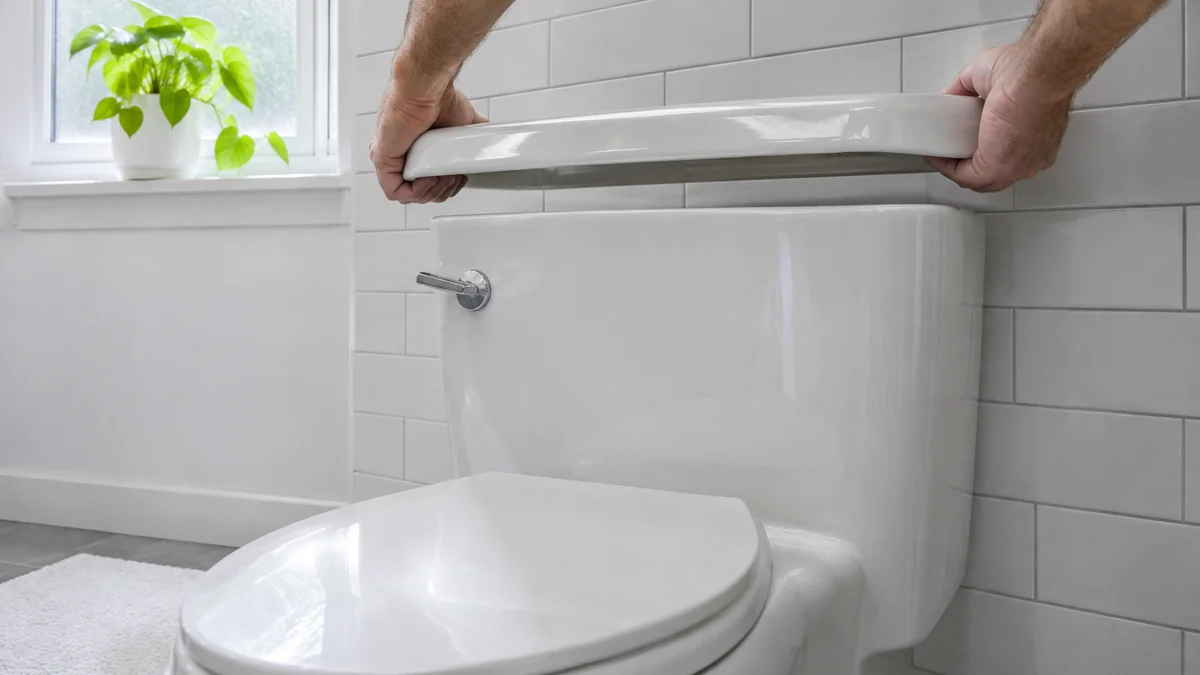
That hissing, trickling, refilling-at-3-a.m. sound isn’t just annoying. A running toilet can waste a surprising amount of water, and the EPA’s WaterSense program lists leaky toilets among the most common household leaks. The good news: you can almost always fix a running toilet yourself in under an hour with basic tools and one inexpensive part. Here’s how to find the cause and fix it.
Quick answer: To fix a running toilet, lift the tank lid and check three things: whether water is spilling into the overflow tube (lower the float or replace the fill valve), whether the flapper is leaking (clean or replace it), and whether the chain is too tight or tangled (adjust it). A worn flapper is the most common culprit.
Get our best DIY tips, free
Practical home and yard projects, tool picks, and money-saving fixes in your inbox. No spam, unsubscribe anytime.
How a toilet tank works (in 30 seconds)
When you flush, the handle lifts a chain that pulls up the flapper, a rubber seal at the bottom of the tank. Water rushes into the bowl. The flapper drops back down and seals, and the fill valve refills the tank until the float rises and shuts the water off. If anything along that chain doesn’t seal or shut off, the toilet runs.
Find the cause: three quick tests
1. Is water flowing into the overflow tube?
Lift the tank lid and look at the open tube in the middle. If water is spilling into it, the fill valve isn’t shutting off at the right level. Usually you just need to lower the float. If that doesn’t work, the fill valve is worn.
2. Is the flapper leaking?
Do the dye test: add a few drops of food coloring to the tank, don’t flush, and wait 15 to 30 minutes. If color shows up in the bowl, the flapper is leaking. Old flappers warp, harden, or collect mineral buildup.
3. Is the chain the right length?
A chain that’s too short holds the flapper slightly open. A chain that’s too long can get caught under the flapper. You want about a half-inch of slack when the flapper is closed.
Tools you’ll need
Tools
- Adjustable wrench or channel-lock pliers
- Bucket and sponge or old towel
- Scrub pad or fine sandpaper (for the flush valve seat)
- Food coloring (for the dye test)
Time: 15–60 minutes · Skill: Beginner · Cost: low
How to fix a running toilet, step by step
Turn off the water and drain the tank
Turn the shut-off valve behind the toilet clockwise until it stops. Knowing where your shut-off valves are pays off in winter too, when you winterize an outdoor faucet. Flush to empty the tank and sponge out what’s left.
Adjust the float first
On a modern fill valve, turn the adjustment screw or slide the clip to lower the float so the water stops about an inch below the top of the overflow tube. On an older ball float, gently bend the arm down. Turn the water back on and test. If it stops running, you’re done.
Adjust or replace the chain
Hook the chain so there’s about a half-inch of slack with the flapper closed. Trim extra length so it can’t get trapped under the flapper.
Replace the flapper
Unhook the old flapper’s ears from the pegs on the overflow tube and unclip the chain. Wipe the flush valve seat clean, then lightly scrub off any mineral deposits. Install a universal 2-inch flapper, attach the chain, and test.
Pro tip: Take the old flapper to the store or compare it to the product photo. Most toilets use a 2-inch flapper; some newer ones use 3-inch.
Replace the fill valve if it keeps running
Disconnect the supply line under the tank, unscrew the locknut, and lift out the old valve. Set the new fill valve‘s height per its instructions (Fluidmaster posts installation guides for each of its fill valves), install it, clip the refill tube onto the overflow tube, reconnect the supply line, and turn the water on slowly.
Check for leaks and test
Watch the tank fill and shut off, flush a few times, and look under the tank for drips. Snug connections a quarter turn at a time; plastic nuts crack if overtightened.
The parts we’d buy

Start here
Fluidmaster 502P21 PerforMAX Universal 2-Inch Flapper
A worn flapper is the most common reason a toilet runs, and this universal 2-inch flapper from Fluidmaster fits most standard toilets. It’s an easy first fix to try before replacing anything else.
- Fits most standard 2-inch flush valves
- 5-year warranty, per Fluidmaster
- Adjustable dial to save water; installs in minutes, no tools needed
As an Amazon Associate we earn from qualifying purchases, at no extra cost to you.

If the tank keeps refilling
Fluidmaster 400H PerforMAX Universal Fill Valve
If water keeps trickling into the overflow tube even after adjusting the float, the fill valve is worn out. This quiet, adjustable fill valve is one of the most popular replacements and fits most toilets.
- Separate tank and bowl water-level adjustments
- Height adjusts from 9 to 14 inches
- Step-by-step instructions included
As an Amazon Associate we earn from qualifying purchases, at no extra cost to you.

Fix everything at once
Fluidmaster 400AKRP10 Complete Toilet Repair Kit
For an older toilet with several worn parts, this kit replaces the fill valve, flush valve, flapper, tank lever, and tank-to-bowl gasket. It’s a bigger job because the tank comes off, but it’s like a tune-up for the whole toilet.
- For toilets with a 2-inch flush valve
- Fits most 2- and 3-bolt tanks
- Includes fill valve, flapper, flush valve, lever, and gasket
As an Amazon Associate we earn from qualifying purchases, at no extra cost to you.
When to call a plumber
Call a plumber if the shut-off valve behind the toilet won’t close or leaks, if water is leaking around the base of the toilet (often a failed wax ring), if the tank or bowl is cracked, or if you’ve replaced the flapper and fill valve and it still runs. Those can point to a bad flush valve, a warped seat, or a cracked fixture.
Fixing small leaks is one of the easiest ways to save on utilities. For more weekend wins, see how to weatherstrip a door or install a smart thermostat. And if you don’t own a good screwdriver yet, our gifts for DIYers list has a favorite.
If the toilet itself is shot, replace it
Most running toilets just need a new flapper or fill valve. If the tank or bowl is cracked, or you have already replaced those parts and it still will not stay quiet, swapping the whole toilet is the cleaner fix. Measure the rough-in (the distance from the finished wall to the center of the floor flange) before you order. A 12-inch rough-in is the most common setup in American bathrooms.

Best if you’re replacing the toilet
ELEMAZ 21″ Extra Tall Toilet for Seniors & Tall Adults | Elongated Bowl
A two-piece toilet with a standard 12-inch rough-in and a 21-inch seat height, which is taller than a typical comfort-height bowl. The elongated bowl and soft-close lid make it a straightforward replacement if the old toilet is cracked or worn out, especially if someone in the house is tall or prefers an easier sit and stand. Check the current price on Simple Project’s site, and compare it on Amazon if you want to see both.
- 21-inch seat height and elongated bowl
- Standard 12-inch rough-in; wax ring and install hardware included
- Soft-close lid; 1.28 gallons per flush
’Round The House DIY may earn a commission if you buy through these links, at no extra cost to you.
Frequently asked questions
The most common causes are a worn flapper that doesn’t seal, a float set too high so water spills into the overflow tube, or a chain that’s too short or tangled. A worn fill valve can also cause constant running.
Try lowering the float so the water stops about an inch below the overflow tube, adjusting the chain so it has a little slack, and cleaning mineral buildup off the flapper and its seat.
Put a few drops of food coloring in the tank and wait 15 to 30 minutes without flushing. If color appears in the bowl, the flapper is leaking and should be replaced.
It varies widely. A slow, silent flapper leak wastes less than a valve that runs constantly, but either can add up to hundreds or thousands of gallons over a month.
Look at the drain opening at the bottom of the tank. Most older toilets use a 2-inch flapper; many newer high-efficiency toilets use 3-inch. Check the toilet’s model number if you’re unsure.
The bottom line
To fix a running toilet, check the float, chain, and flapper, in that order. Most of the time, a small adjustment or a new flapper solves it in minutes. If not, a new fill valve is the next step, and it’s still a very doable DIY job. For an older toilet with several worn parts, a complete tank repair kit can replace the fill valve, flapper, and flush valve at once.

Leave a Reply